
This is an additional commentary, along with accompanying technical and visionary imagery, for Fluxion Metamorphosis: The Castle of Birds as an Oral Computer by Peter Duchemin, published in Monad: Journal of Occultural Studies Volume 1, Special Issue – The Art of Revelation.
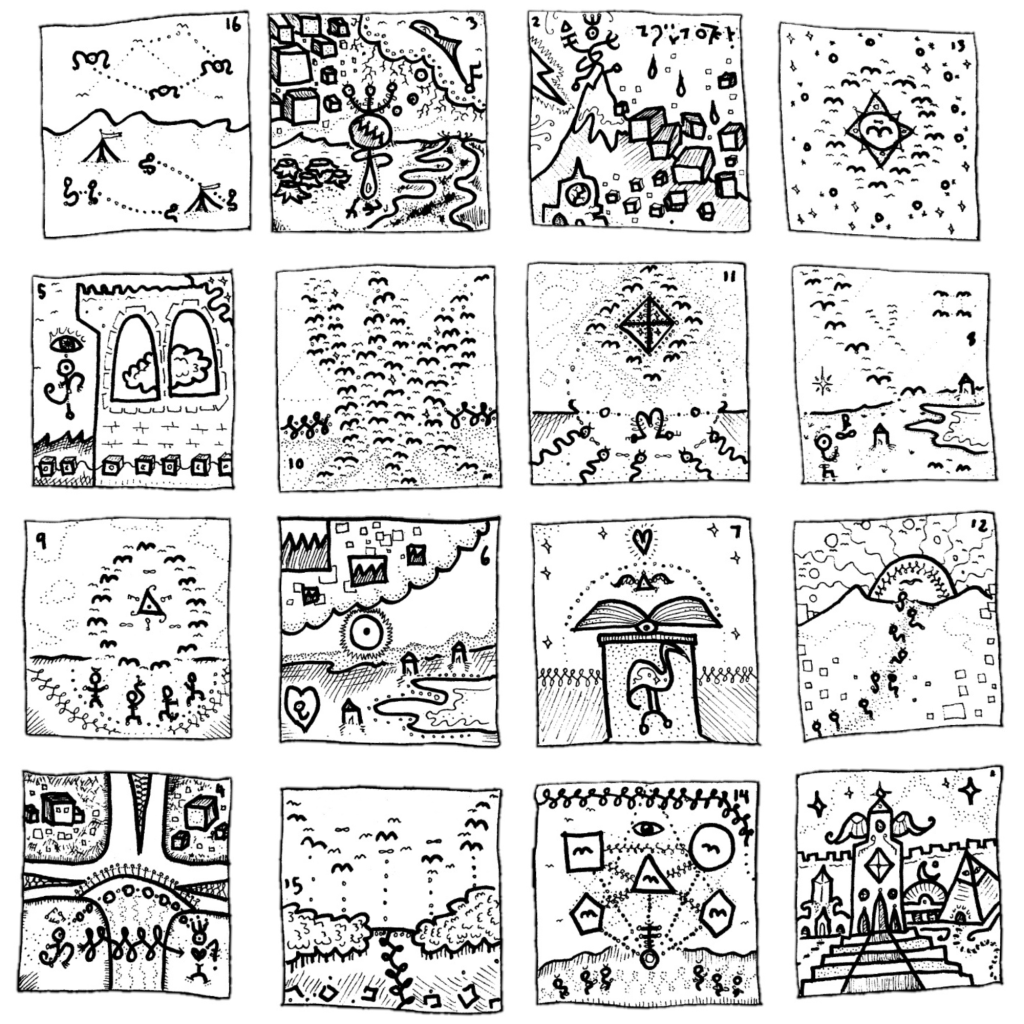
Image 1 – The Castle of Birds, Jupiter Square
The sixteen key moments of The Castle of Birds are each a condensation of affect. By arrangement in the form of Albrecht Dürer’s famous Magic Square of Jupiter (in Melancholia I), those affects are treated as pure resonances and liberated from their linearity (Dürer, 1581). The logico-conceptual aspects of the story are backgrounded, and the emotional aspects are foregrounded and remixed into a singular, non-linear, aesthetically resonant tableau. While the mind is trying to understand, the heart is singing along regardless. Deep structures and patterns thus become an armature that supports the blooming of awareness as “nonlinear, palindromic fields”. We are reminded of Borges’ “Garden of Forking Paths,” in which time, in any absolute sense, is simultaneous, proliferate, entangled, and expressive (Borges, 2000).
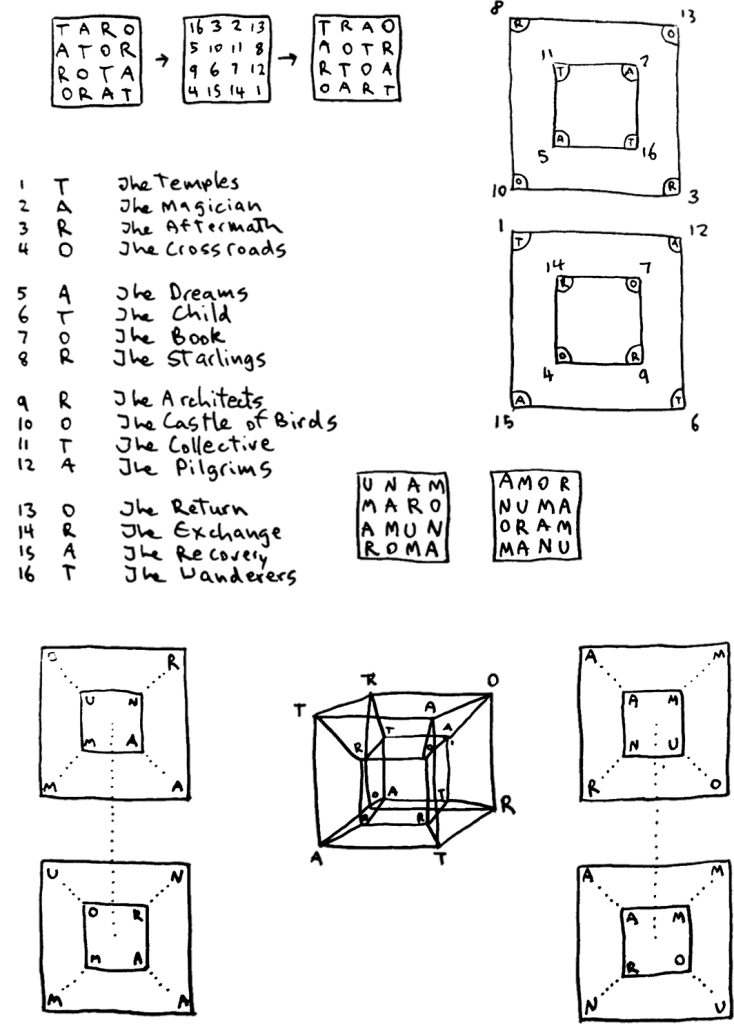
Image 2 – The Castle of Birds, Tesseract
The sixteen key moments, which, distilled into blocks of affect (See Deleuze and Guattari, “What is Philosophy?”, chapter 7, for a full discussion of this), are now mobilisable independently from their conceptual content and are treated as pure energies of nondual expression (Deleuze & Guattari, 1994).
In the arrangement shown, these blocks are used to construct a “magical tesseract”—which is to say, the aesthetic emotions are visually arrayed to model a 4-dimensional hypercube, wherein each of the eight subordinate cubes has the same “magical” number-value (34), when all the corners are added up. Since, by cathexing an affect onto a number, we make that number emotionally resonant—the Tesseract structure, each sub-cube is now effectively a chord, playing a kind of “frozen music” that modulates the awareness fields. See Cliff Pickover’s “The Zen of Magic Squares, Circles, and Stars” for this (Pickover 2002), and other suggestive mathemagical armatures, as well as for a discussion of “frozen music”—the “arithmetic satori” effect of mathemagic square dynamics.
The Castle of Birds is an ideal case study for this kind of experiment, because the role of the fable is explicitly to point towards this form of “high technique”: shaping the Castle of Birds as a holistic-awareness-field IS the direct analogy of commanding the birds to fly in formation. Note that several fourfold palindromic “spells” are given as optional resonators to help shape/overcode these formations. The spells are:
AMOR UNAM TARO
MARO NUMA ATOR
ORAM AMUN ROTA
ROMA MANU ORAT
They all doubtlessly have historical precedents, but were obtained by the author via personal gnosis.
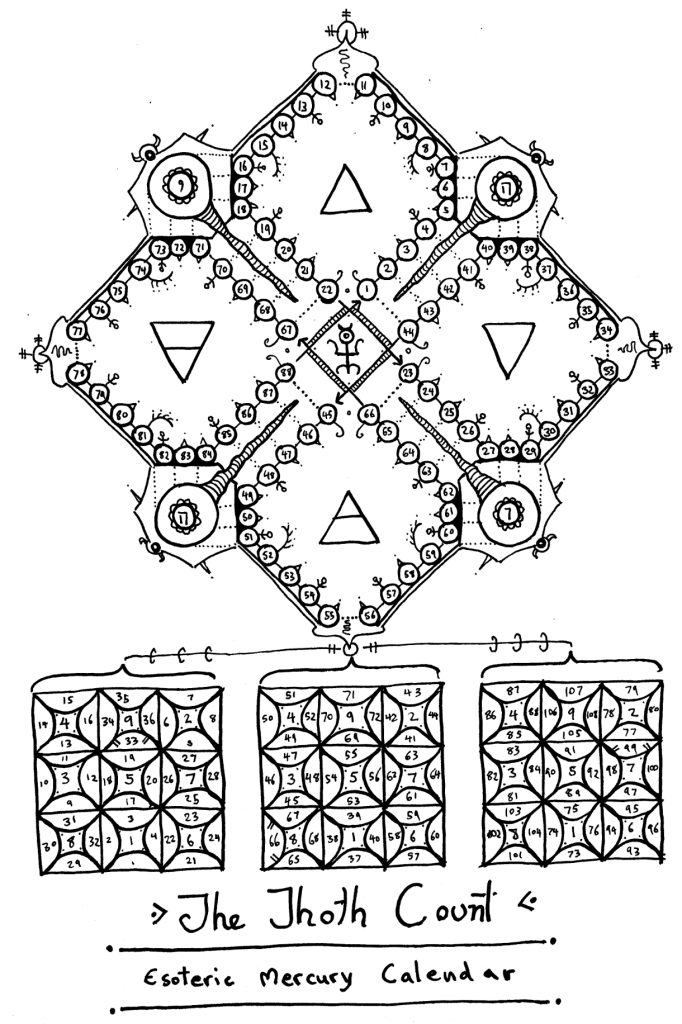
Image 3 – The Thoth Count
The 88 individual stanzas of the Castle are, naturally, meant to be memorised—as any script is—however, consider that once memorised, the orator is free to improvise the passage in little ways—substituting animal names, or specific phrasings, so as to suit performance circumstances. Nevertheless, each stanza has an aesthetic essence, and it is this essence of emotion—what might be called a “rasa” in the advaitic/tantric tradition—that is at the heart of the methodology. (Dehejia, 1994) The 88 essences are like pearls on a string—read linearily, in order—but consider the shape of that line: it need not be straight!
Here we see a fourfold knot wherein four 22-node strings are looped together. The Castle’s 88 stanzas can be visualized as looping in this way—when it is recalled that the aesthetic essence is considered as a nondual expression of pure becoming—rather than merely a subjective moment inside of the brain of a memorizer—then we see the Castle as weaving this fourfold spell, which, conveniently is mapped onto the four elemental quadrants (fire, water, air and earth), the four directions, and the major arcana of the Tarot, assumed to be playing out in the worlds of Emanation (1-22), Creation (23-44), Formation (45-66), and Actualization (67-88).
What is more, this entire map is furnished to track the 88-day orbit of Mercury, using a magical calendar developed by the author called “The Thoth Count”. This 88-day perpetual calendar was originally launched on Dec 19th 2003, as Mercury crossed the ecliptic, heliocentrically, at its north draconic node: roughly 49° of right ascension (19° Taurus). This gives a cosmic storytelling dimension, proposing to host the structures and associations discussed above within an abstract image of the Mercurial orbit, which can nevertheless be performed ritually in real time. That is to say, the practitioner would assign the 88 stanzas to the 88 days of the Thoth count, and read them daily, thus being assured that the “spell” was synchronised to the celestial movement. This is a sort of meta-magic that operates as “the pressure of art, brought to bear on time.” Obviously this type of procedure has resonances with the “Hermetic axiom”—As Above So Below, and is a heliocentric/astronomical attempt to achieve a mapping between cosmos, psyche, and socius (the cosmic state, the individual psychic state, the psychic state of the community of practice which have been synchronized by use of this calendrical practice).
The three magic “Saturn squares” or Kamea, shown below the fourfold knot image, constitute a tracking board of the longer cycles of Mercury. For ease of use as a memory palace/oral computer, Mercury years are grouped into sets of four (fire, water, air, earth—352 days), then batched again into sets of nine (beginning of beginning, middle of beginning, end of beginning, beginning of middle, middle of middle, end of middle, beginning of end, middle of end, end of end). These sets of nine, each containing 36 years in total, are then grouped into threes, as in the layers of a 3x3x3 cube, or fours—again as in the elemental categorisation, Tetragrammaton, etc. The reason for this is so that the individual orbit—the 88 day incantation of the Castle of Birds—can become the point of access to a semiotic program that variously could span across roughly 8.7, 26, 34.7, or 104.1, earth years, depending on at what scale it is taken—and this is a Mentat’s device par-excellence- a means of establishing a long term, programmatic “manifestation rhythm”, with a nested, fractal-like structure. In this respect, it is in suggestive sympathy with another great 20th-century science fiction story, Isaac Asimov’s Foundation (Asimov, 1991).
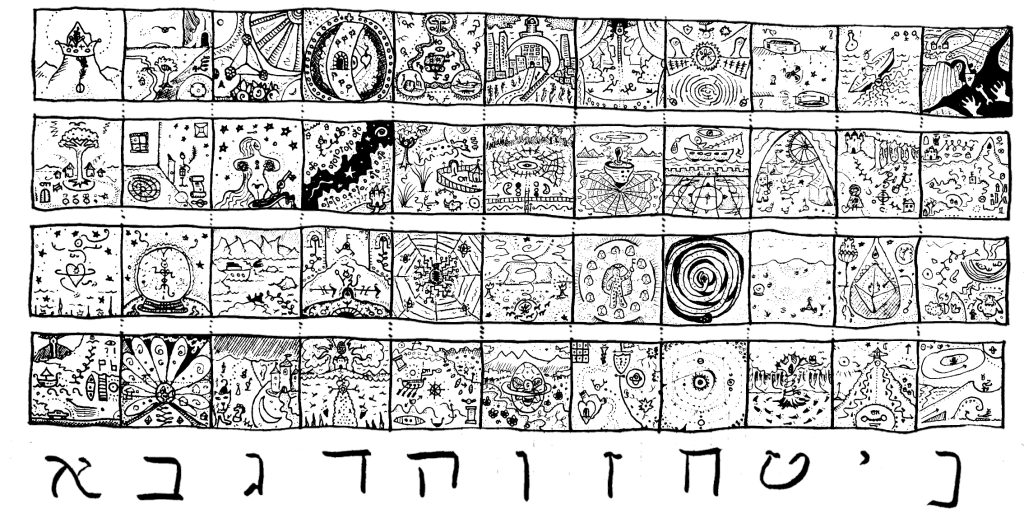
Image 4a – “Scryed” images for 88 days, (first half)
The development of a magical calendar for a previously unmapped celestial object (such as a planet) tends to proceed in two phases, which I have termed the “dry” and “wet” phases, respectively. In the first phase, the calendricist determines the planet’s orbital period (in this case, 88 days) and subdivides it into manageable/livable chunks, as well as super-divides it into large, visualizable organisations that bundle together many orbits and span longer periods of time. These could be called “intra-annual” and “extra-annual” organisations, respectively.
In the example of the Mercury, “Thoth” count, the intra-annual structures are the four groups of 22 days, while the extra-annual structures are the groups of 4 years, 9 years, 36 years, 108 years, etc (The aforementioned Kamea). These divisions are all “dry” because they refer wholly to the abstract chassis of the armature itself, and have been given no intrinsic associative content. All the divisions are effectively empty slots. The “wet phase” uses various different ways of filling the vacant slots with associative content—rasa means “sap.” The analogy is that the dry phase establishes the calendar as a mnemotechnic “trellis”, and the wet phase grows grapes (or other things) across that trellis. In this and the next image, I depicted the 88 days as four consecutive “runs” of 22 days each, and assigned these days to the letters of the Hebrew alphabet, from Aleph to Tau. The first image contains the first 11 days of each run, and the second image contains the final 11 days of each run. The topmost row is assigned to fire, the second row down to water, the third row down to air, and the bottom-most row to earth.
Once the “dry” organisation had been determined and set, I undertook to have visionary experiences for each day, effectively causing rasa/aesthetic emotion to circulate through the frame. I used an obsidian mirror for this purpose, and entered a visionary state in which, in each case, I beheld a scenario of some kind—often like a fairy tale, and sometimes drawn from contemporary literature or film—Ghormenghast (Peake, 1995) or Dune (Herbert, 2006). I made shorthand drawings of each experience that allowed me to a) condense the emotional content of the vision into a block of affect, b) populate the empty slot, or locus with rich imagery—as per the classical memory arts of Cicero, Bruno, etc, and c) “load” or cathex the empty frame of the calendar with material that I could now use to associate, reflect on, etc. This is how the wet phase populates the frame of the dry phase—the grapes of vision grow on the trellis of calculation. Note, however, that this does not depict any of the scenes or themes of the Castle of Birds directly—it is, in fact, a completely parallel, independent, and self-contained system of new associations, which nevertheless is hosted under the same aegis as the Castle. The calendrical frame is the Hardware, the stories are the software. In this case, the Castle is the main software—akin to the operating system—and the 88 independently scryed scenes are like separate, independent apps running on the operating system. In any event, we have objective frames, and subjective “skins” for those frames.
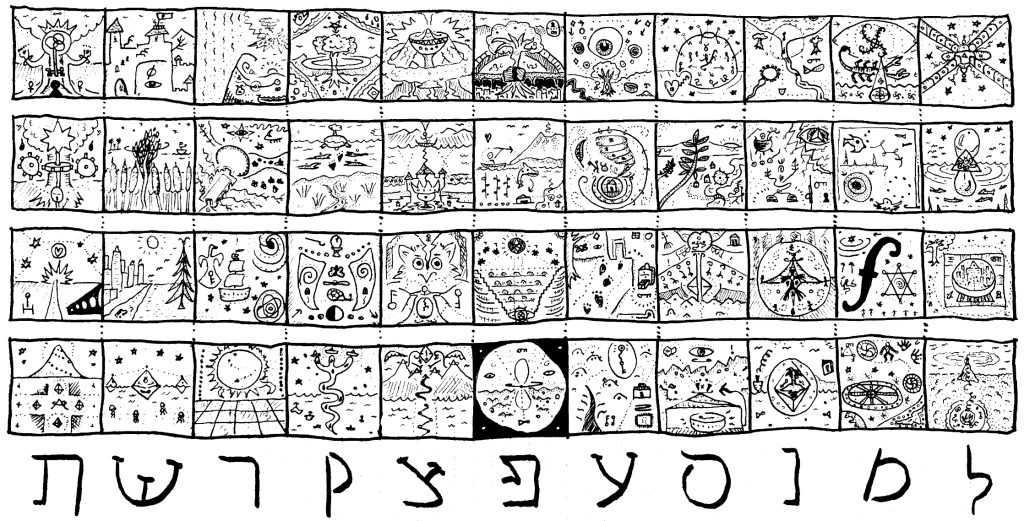
Image 4b – “Scryed” images for 88 days, (Second
half) Refer to the above commentary.
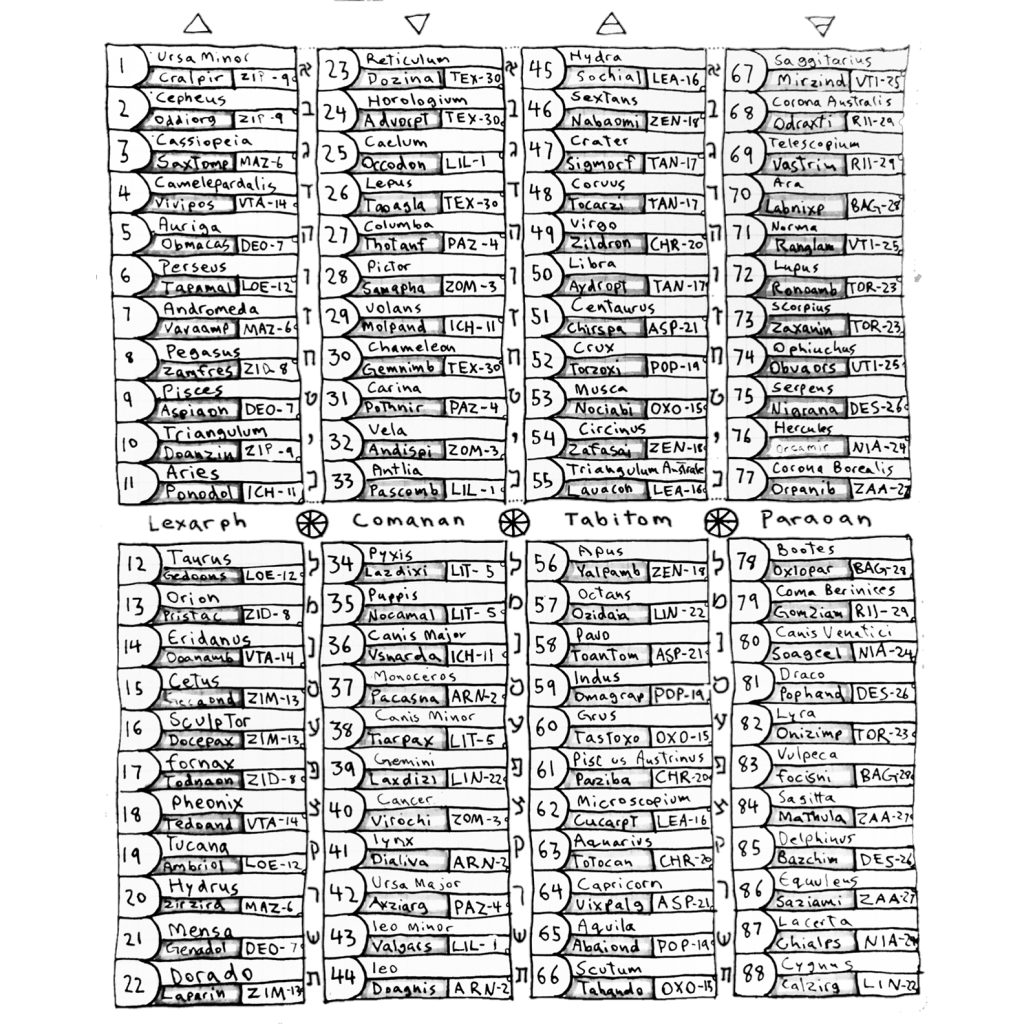
Image 5 – The Enochian and Stellarium extensions of the CoB Memory Palace
This chart, which is a companion to the previous two images, shows how these loci may be mapped onto the Enochian Watchtower system proposed by John Dee, and of wide use in different ways in mainstream western occulture. An explanation of this system is outside the scope of this small article; however, I will state my main considerations. 1) Following the “corrected” watchtowers proposed by David Allen Hulse in “The Western Mysteries” (2007), I assume the Enochian governors to be the key to the system—a system which I view as a “pattern compression” techniqueology, more so than as a transcendental metaphysical framework. In this view, I assume that Edward Talbot/Kelley acquired this skill either by invention or transmission and essentially memorised the tables before performing the “angelic communications” for Dee. In this view, what is most of interest is how the 7-letter governor names form like puzzle pieces into the larger tableaux, which gives four great 12×13 squares connected by a 4×5 table—“the tablet of union”.
There are 92 of these 7-letter names in total, of which four are special: they are either on (or mostly on) the tablet of union, or in one case, broken up across all four tables. The main point of interest, however, is that there are twenty-two of these governors left over in each of the four tables. In other words, there are 22 for fire, 22 for water, 22 for air, and 22 for earth. I chose to use an algorithm to determine/fix their order for my purposes—I drew a spiral through each of the watchtowers in the same way and picked the order of the governors based on the sequence in which their first letter appeared in the spiral. In this way, I mapped the 88 days of the Thoth Count to the 88 watchtower-exclusive governors, preserving the 4×22 division.
Finally, I assigned the four remaining governor names to the four “seasons” themselves (the first, second, third, and fourth “runs” of 22 days)—a kind of gestalt governor. Finally, I showed affiliation to the major arcana of the Tarot by assigning the letters of the Hebrew alphabet in order to each of the four “spiral” sequences. It is now possible, if we account for all this layering and resonance, to consider a telling of the Castle of Birds to be an invocation of the four watchtowers in toto as a hypercomplex awareness field—wherein the main “boon” provided to the practitioner is to be able to consider and integrate highly complex and “crenellated” patterns into a whole. In other words, where others see a confused and opaque jumble, the Enochianist is able to impose and navigate a secret coherency, and that allows them to appear to do miraculous feats of intellect and apprehension. It is not unlike a maze-like theatre, wherein the uninitiated are ignorant of a methodology that allows the initiated to move freely through the maze via secret passages that appear and disappear. Perhaps this was its initial intent, a weapon aligned to Dee’s colonial ambitions.
The mapping of Enochian onto the Thoth count is meant to be a means of disclosing how this maze operates and empowering the calendar’s practitioners to be clear in relation to it. The Castle of Bird “metabolises” the temple of Enochian, in this way, and converts it, via the Thoth Count, into a matrix of becoming. This reverse-engineering and remediation of Enochian is contrary to the common “sacrosanct metaphysical architecture narrative” and is meant to convert it into something more embodied and ultimately put it in service of the healing of the physical earth and the dismantling of its more egregious legacies. This dynamic is, of course, echoed in the way that the cubes are ultimately replaced by the bird castles in the narrative.
The Stellarium assignments are at once more straightforward and entirely unsymbolic in their intent. The order of the 88 constellations is given in an order of adjacency, which is meant to help memorise them consecutively. The sequence is, in fact, a loop around the celestial globe, which “addresses” one constellation a day, roughly in the four quadrants and two hemispheres, sweeping across from north to south four times to complete the loop. An oroboros, again. The first day starts in Ursa Minor because of the star Polaris, the north star, and the last day ends in Cygnus, because of the star Deneb, which is the star towards which our solar system is moving in its orbit around the galactic disk. Since Cygnus is adjacent to Ursa Minor, this creates a ribbon of constellations which perpetually cycles through and completes the practitioner’s inner visualisation of the heavens.
This demonstrates that applications of the orally transmittable computer need not be “occult” or esoteric, and might instead simply be pragmatic—in this case, aiding practitioners in fully mapping the sphere of the heavens and memorising star maps. Any seeming symbolic association between the Tarot trumps, or Enochian, or the passage of the Castle of Birds, and a given assigned constellation should therefore be resisted, and they should be kept in intellectual quarantine, as it were, from one another. The stellarium is merely another program allowed onto the armature of the Thoth count.
Textual Sources:
Guattari, Felix & Deleuze, Gilles. What is Philosophy? Columbia UP, 1994.
Borges, Jorge Luis. Garden of Forking Paths in Labyrinths. Penguin Books, 2000.
Pickover, Clifford A. The Zen of Magic Squares, Circles and Stars. Princeton UP, 2002.
Asimov, Isaac. Foundation. Spectra, Bantam Books, 1991.
David Allen Hulse. The Key of It All, Book II: The Western Mysteries. Llewellyn, 2007.
Dehejia, Dr. Harsha. The Advaita of Art. Motilal Banarsidass, 1994.
Peake, Mervyn. Ghormenghast. The Overlook Press, 1995.
Herbert, Frank. Dune. Hodder Paperback, 2006.
New Multimedia Sources:
Dürer, Albrecht. Melancholia I. 1514.
Author Bio:
Peter Duchemin is a verb. These works are transactions. Experiences varying from interdisciplinary doctoral studies in continental philosophy, active art production, advanced proprioceptive learning, experimental calendrics, enjoyment of unorthodox musicks, circus activities, and mirth are all evidenced in the phenomenological encounters we might expect to experience in relation to this particular expression of human play, the “being”, biographised in this short statement.